
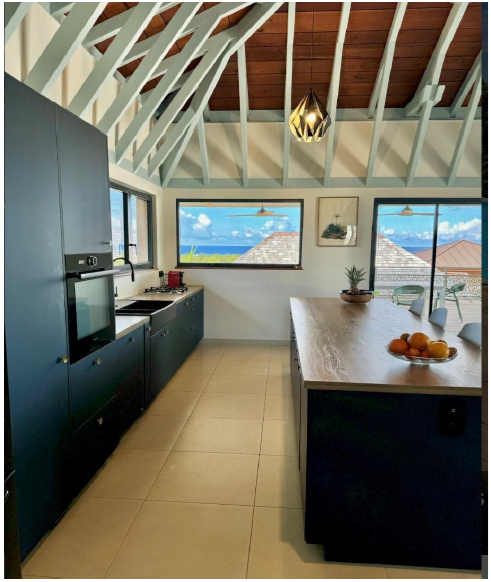
Terres Basses is the top of the market on this island. It is the French side peninsula in the west, known in English as the Lowlands, and it is almost entirely residential. Large parcels, private driveways, no commercial strip, no hotel row, and three of the best beaches in the Caribbean within a few minutes of each other.
If you are looking at a villa here, you are making a lifestyle purchase first and a financial decision second. The French side costs more to enter and more to exit than the Dutch side. Buyers in Terres Basses know that and buy anyway, because nothing on the Dutch side matches it for land, privacy and beach quality.
This guide covers what the area is, what the villas are like, who buys them, how the rental market works at this level, and exactly what the French side costs.
Where Terres Basses is and why it developed this way
Terres Basses occupies the low lying western arm of the island, with open sea on one side and Simpson Bay Lagoon on the other. It sits on the French side. You reach it either from the Dutch side through Cupecoy, or from Marigot along the road through Sandy Ground and Baie Nettle.
The area developed as villa land rather than resort land. There is no shopping street, no casino and no nightlife. What you get instead is a quiet grid of private roads, generous setbacks, mature landscaping and a gated feel throughout. Many sections have an owners association that funds road maintenance and security patrols, so ask what applies to the specific parcel and what it costs each year.
It is better connected than the silence suggests. Princess Juliana International Airport is a short drive through Cupecoy, which matters for a villa that rents. Mullet Bay Golf Course, the island’s only course, is just over the border, and Porto Cupecoy covers groceries and restaurants. Marigot, with the waterfront market and Fort Louis above it, is ten minutes the other way. Grand Case is about twenty five minutes north.
The beaches
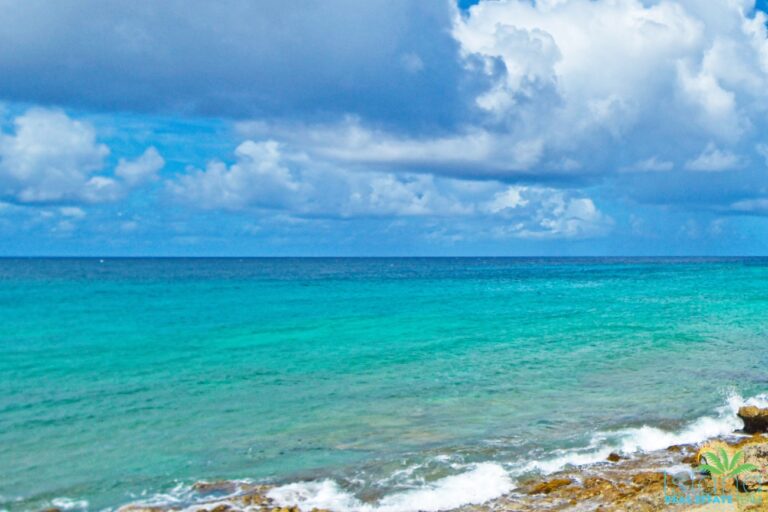
The beaches are the reason the land is worth what it is worth.
- Baie Rouge. A long curve of sand with a rock arch at the western end. It is the most visited of the three and still feels empty by regional standards.
- Plum Bay, or Baie aux Prunes. Smaller, quieter, favoured by residents, and a good sunset beach. Access runs through the residential road network, which keeps the crowds away.
- Long Bay, or Baie Longue. The longest beach on the island, wide and mostly undeveloped, with the kind of walk you can do for an hour without meeting many people.
What matters for a buyer is that these are neighborhood beaches. They are not cruise beaches and they are not lined with vendors. That follows directly from Terres Basses having no through traffic and no commercial development, and it is the feature most likely to persist.
What a Terres Basses villa actually is
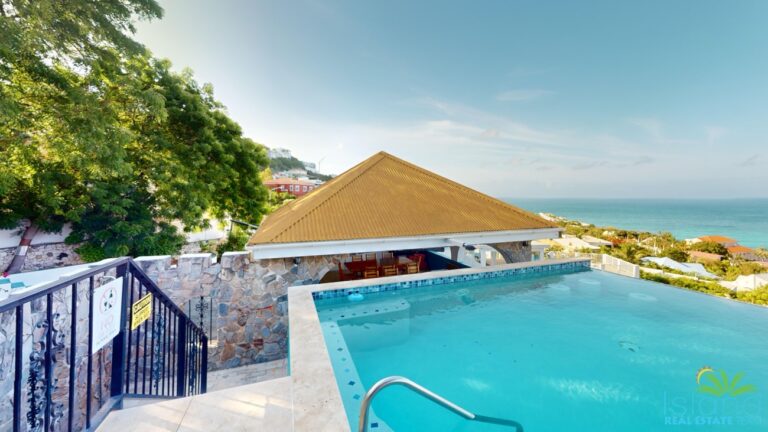
The housing is detached villas on private parcels. The typical property runs from three to six bedrooms, with a pool, covered terraces, open plan living designed around the view, and a garden that needs real maintenance. Many have a guest cottage or a self contained lower level. Homes rebuilt after Irma tend to have better glass, better roofs and better mechanical systems.
Within that there are three broad tiers:
- Beachfront and beachfront access. The rarest inventory, on or steps from Baie Rouge, Plum Bay or Long Bay. These homes trade infrequently and price accordingly.
- Hillside and ocean view. Elevated positions with sea views, usually more house and more land for the money, and generally better breeze.
- Lagoon side and interior. Quieter positions over Simpson Bay Lagoon or set inside the peninsula, with the lowest entry point into the area.
Do not assume age equals quality. Some houses built in the 1990s were built extremely well and maintained obsessively. Some newer ones were finished in a hurry. Judge the specific house.
Who buys here
The buyer profile is consistent: mostly North American and European second home buyers, often families who have been visiting for years and finally want their own base. A growing group works remotely for part of the year. A smaller group lives here full time.
They share a preference for privacy over convenience. A Terres Basses owner is happy to drive to Marigot for the market and to Grand Case for dinner, and would rather have a gate, a garden and an empty beach than the ability to walk to twelve restaurants. If walkability matters more to you, Simpson Bay, Maho or Cupecoy will suit you better.
The rental market at this level
High end villa rental is a real market on this island, and Terres Basses is its centre. The mechanics differ from a condo rental.
- Villas let by the week, not the night. Christmas and New Year carry a premium and a minimum stay.
- The season is concentrated. High season runs roughly mid December to mid April, with the Heineken Regatta in early March. Late August into October is slow, and many owners use that window for maintenance.
- Management is not optional. These houses need a manager, housekeeping, and pool and garden service, often with a chef or concierge on request. Agencies take a share of revenue for that.
- Airport proximity sells. Guests paying villa rates do not want an hour in a car after a long flight, and being fifteen minutes from SXM is a genuine commercial advantage.
Be realistic when you underwrite it. Weekly rates look impressive, but occupancy at this level is counted in weeks per year, and the cost base is heavy: staff, windstorm insurance, utilities, pool and garden, and a maintenance reserve for a large house in salt air. Run it properly in the calculadora de rendimiento de alquiler before you assume a villa pays for itself. Most owners treat rental income as an offset against carrying costs rather than as a return, and no rental outcome is ever guaranteed.
The French side cost reality
Saint Martin has been a French overseas collectivity since 2007, French law applies, and transactions are in euro. The cost structure is meaningfully heavier than the Dutch side.
| Item | Saint Martin, French side | Sint Maarten, Dutch side |
|---|---|---|
| Notaire or notary fees and duties | Roughly 7 to 10 percent combined | 4 percent transfer tax plus roughly 1 to 2 percent notary |
| Total cost to complete | About 8 to 10 percent | Roughly 5 to 6 percent |
| Annual property tax | Taxe fonciere applies | None |
| Capital gains on resale | Up to 34 percent, with relief where it is your main home | None |
| Currency | Euro | US dollar in practice |
| Legal framework | French law, strong on consumer protection | Notary is a neutral officer of the law |
| Foreign ownership | No restriction | No restriction |
Read the capital gains line twice, because it is the one that surprises people. A resale at a profit can attract tax of up to 34 percent, with relief where the property has been the seller’s main home. For a second home held a few years and sold into a strong market, that is a live issue, and it belongs in your plan on day one. Put both sides next to each other with the Dutch versus French comparison in our property tools. Tax rules change, so confirm the current position with the notaire handling your file and with your own tax adviser before you sign.
Buyers here optimise for lifestyle, not tax
We will say this plainly, because pretending otherwise helps nobody. If your only objective is the lowest total tax and the cleanest exit, the Dutch side is the better structure: 4 percent transfer tax, no annual property tax, no capital gains tax, and transactions in US dollars.
People buy in Terres Basses anyway, and the reasons hold up. Nothing on the Dutch side matches it for parcel size, privacy, or beaches like Baie Rouge, Plum Bay and Long Bay. French village life, the lolos and restaurants of Grand Case, the market at Marigot and a ferry to Anguilla twenty minutes away are all part of it. That is a strong lifestyle case. It is simply not a tax case.
Due diligence on a Terres Basses villa
- Construction and rebuild history. Hurricane Irma made landfall on 6 September 2017 as a category 5 storm. Ask what was rebuilt, when, and to what specification, with particular attention to the roof, the glass and the shutters.
- Insurance. Get the current policy, the premium and the claims history. Windstorm cover on a large villa is one of the biggest annual items.
- Water, power and backup. Cistern capacity, pumps, solar, inverters and generators. Big houses with pools consume a lot, and utilities here are expensive by regional standards.
- The owners association. Ask what it covers, what it costs, and how the private roads and security are handled.
- Title and boundaries. The notaire verifies title. Have parcel boundaries, easements and any beach access rights confirmed in writing.
Preguntas frecuentes
Is Terres Basses gated?
It has a gated character rather than one single gate. Access is controlled in parts, many sections have private road networks funded by an owners association, and security patrols are common. Confirm exactly what applies to the property you are considering.
Can a foreign buyer purchase in Terres Basses?
Yes. There is no restriction on foreign ownership on either side of the island. The purchase is handled by a notaire under French law and completed in euro.
How does French side capital gains tax work on a villa?
A resale at a profit can be taxed at up to 34 percent, with relief where the property is the seller’s main home. The detail depends on your circumstances and on current rules, so take advice from a tax adviser and the notaire before you buy, not after.
Do Terres Basses villas rent well?
The better ones do, in season. Weekly rentals concentrate between mid December and mid April, with the holidays at the top. Summer and early autumn are quiet, and costs at this level are high, so model net rather than gross.
What is nearby for daily life?
Porto Cupecoy and the Dutch side shops are minutes away through Cupecoy. Marigot, with the waterfront market and Fort Louis, is roughly ten minutes. Grand Case is about twenty five minutes north. There is nothing commercial inside Terres Basses itself, which is the point.
Where to start
Inventory in Terres Basses is thin by design, and good villas often sell to buyers who were already watching the area. The useful first step is to get briefed properly on what trades here, what it costs to run and what a realistic rental year looks like.
See what is currently available on our listings page, then talk to us about the Lowlands directly. We can tell you which parcels have real beach access, which houses were rebuilt well after 2017, and where running costs are heavier than a listing suggests. Contact us through our contact page, or read about the people you will be dealing with on our team page.