
Most of the money buyers lose in St. Maarten is not lost on the purchase price. It is lost on the things nobody put in the budget: the 4 percent transfer tax, an association assessment for a roof, a windstorm premium on a building that was patched rather than rebuilt, or a GEBE bill three times what the owner quoted.
None of it is hidden. It is simply not obvious to someone buying from four hours away in another legal system. Here are the nine mistakes we see most often, each with a specific alternative.
Costs, tax treatment and rules change, so confirm anything financial or legal with the notary handling your purchase and with a tax adviser in your own country.
1. Not budgeting the 5 to 6 percent cost to complete
On the Dutch side, completing a purchase costs roughly 5 to 6 percent on top of the price: 4 percent transfer tax plus a notary fee of 1 to 2 percent. Borrow from WIB, RBC, Republic Bank or Orco Bank and the mortgage deed and its Kadaster registration add about another 1 percent.
| Cost line | Dutch side |
|---|---|
| Transfer tax | 4 percent |
| Notary fee | 1 to 2 percent |
| Mortgage deed and Kadaster registration | About 1 percent, if you borrow locally |
| Total, cash purchase | 5 to 6 percent |
| Total, with a local mortgage | 6 to 7 percent |
| Annual property tax | None |
| Capital gains tax on resale | None |
What to do instead
Set your budget as the total cash needed on signing day, not the listing price. Run it through the buyer cost guidance in our property tools before you view, so every property is already priced properly in your head.
2. Ignoring association dues
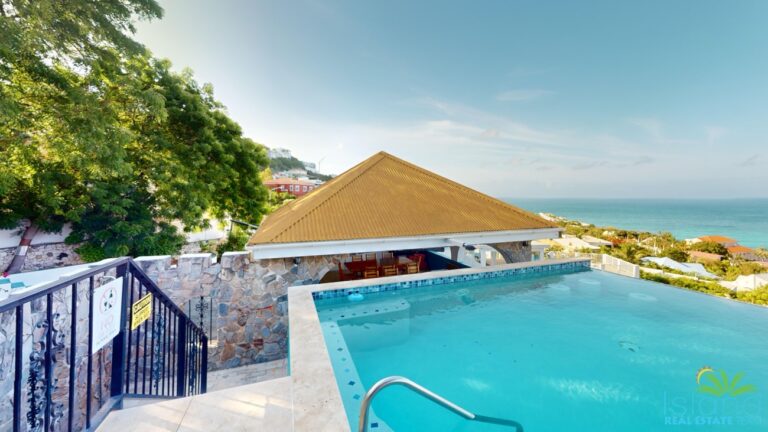
In a condo building the dues are a permanent part of your cost of ownership and here they are often significant. They typically cover insurance on the structure, common areas, security, landscaping, pool and sometimes water. Two apartments at the same asking price in Cupecoy and Pelican Key can carry very different monthly obligations.
The bigger risk is the special assessment. Buildings need roofs, generators, pumps and paint, and if the reserve is thin that cost arrives as a one time bill divided among the owners.
What to do instead
Ask in writing for the current dues, the reserve balance, two years of accounts, recent minutes and any assessment discussed but not yet levied. A building with higher dues and a funded reserve is usually cheaper to own than a cheap building with deferred repairs.
3. Not checking windstorm insurance and how the building was rebuilt
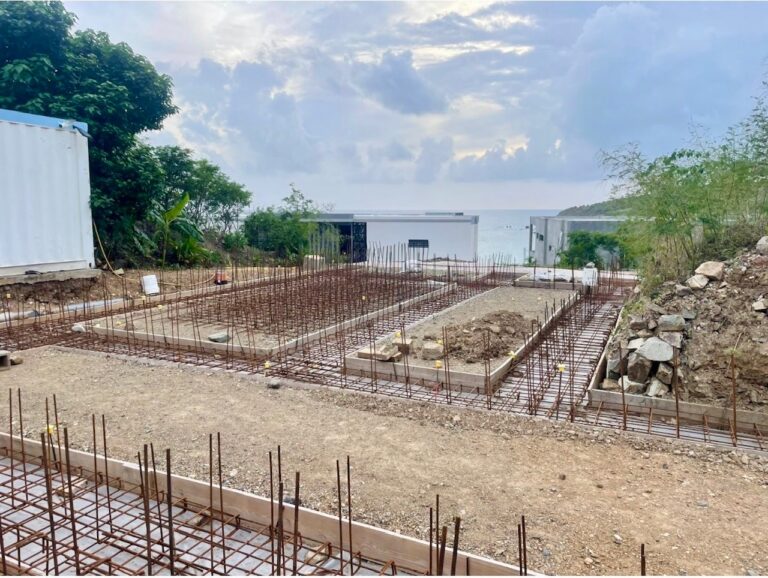
Hurricane Irma made landfall on 6 September 2017 as a category 5 storm and reset the island’s building stock. Some properties were rebuilt to a genuinely better standard. Others were patched. On a sunny Tuesday both look fine.
Insurance is where the difference shows. Windstorm is the expensive part of a Caribbean policy, and on a questionable roof it can be costly, restricted or hard to place. If you are borrowing, an insurance problem becomes a financing problem.
What to do instead
Ask for the construction date, what was rebuilt after 2017 and with what permits. Look for concrete construction, impact glass or shutters and a documented roof. Get a windstorm quote before your conditions expire, and remember hurricane season runs 1 June to 30 November, with insurers binding new cover more slowly when a system is being tracked.
4. Assuming the French and Dutch sides work the same way
The island is about 37 square miles and has been shared since the Treaty of Concordia in 1648. You can drive from Philipsburg to Marigot in half an hour with no border formality, which makes buyers assume the two sides are interchangeable. For ownership purposes they are not.
| Dutch side | French side | |
|---|---|---|
| Cost to complete | About 5 to 6 percent | About 8 to 10 percent |
| Annual property tax | None | Taxe fonciere applies |
| Capital gains on resale | None | Up to 34 percent, relief for a main home |
| Currency | US dollar in practice | Euro |
| Status | Autonomous country in the Kingdom of the Netherlands since 10 October 2010 | French overseas collectivity since 2007 |
What to do instead
Decide which side suits your plan before you shortlist, because a villa in Terres Basses and a villa in Guana Bay behave differently over a ten year hold. Compare them with the Dutch versus French tool before you shortlist anything. Take particular care around Oyster Pond, where the border runs through the area and the side a parcel sits on determines the tax and the law.
5. Buying for rental without checking the building’s rental rules
Rental demand here is real. Maho and Simpson Bay hold holiday occupancy through the season, Orient Bay draws its own crowd, and the Heineken Regatta in early March, SXM Festival and Carnival in April and May fill anything with a bed in it.
None of that helps if your building does not allow the rental you have in mind. Some associations set a minimum stay, some cap the units in a rental programme, some require the onsite manager, and some ban nightly letting.
What to do instead
Get the rental rules in writing from the association before you remove conditions, with the management fee and cleaning cost. Then model the return with a rental yield calculator, using low occupancy in the quiet months rather than a full year at peak rates.
6. Not visiting in low season
The island in February is a different product from the island in September. High season runs roughly mid December to mid April. Everything is open, Grand Case Harmony Nights closes the boulevard on Tuesdays, the lolos are busy and Front Street fills whenever ships are in at Port St. Maarten.
Late August to October is the quiet stretch. Some restaurants close, staffing thins, and it is the peak of hurricane season. It is also half of the year you would own.
What to do instead
See your shortlist in both seasons if you can. If you get one trip, come in the quiet months and ask what changes in season. Ask the practical questions too: how far is Sint Maarten Medical Center in Cay Hill, and does your insurance cover medical evacuation, given serious cases are often flown to Guadeloupe, Puerto Rico, Colombia or Miami.
7. Underestimating utility costs
Electricity here is expensive by regional standards. GEBE supplies power and water on the Dutch side, and a house running two air conditioning units, a pool pump and an electric water heater produces a bill that surprises buyers from temperate climates. Outages happen, which is why so many owners fit solar panels, an inverter or a cistern.
What to do instead
Ask the seller for twelve months of actual GEBE bills rather than an average, so you see the summer peak, and ask what the dues include, since some buildings cover water and some do not. Then look at what would cut the cost: solar, a heat pump water heater, shade, and windows that catch the trade wind. Add TelEm internet to the budget if you plan to rent.
8. Skipping a proper title check
The notary searches the title at the Kadaster as a matter of course, and that search is the backbone of the transaction. The mistake is treating the title stage as a formality and not engaging with what it turns up.
Real issues appear here. Extensions built without permits after 2017. A driveway or cistern partly on a neighbour’s parcel. An old mortgage never formally released. Parcels in districts like Sucker Garden, Dutch Quarter and Middle Region still registered to a grandparent, with heirs in three countries who all have to agree.
What to do instead
Read the notary’s findings and ask direct questions about anything that does not match what you were shown. Confirm the registered boundaries match the fence line and that every structure has paperwork behind it. If an estate is involved, ask how far along the settlement is, because that one answer can move your closing by months.
9. Choosing a neighborhood from photos rather than a visit
Photographs flatten everything that matters here: noise, wind, access, sun and how long it really takes to get somewhere. Maho Beach sits at the end of the runway at Princess Juliana International Airport, which is why the plane spotting is world famous, and aircraft noise varies enormously building to building. Cupecoy is quiet and minutes from Mullet Bay Golf Course, but the drive into Philipsburg on Airport Road is a different experience at 8am than at noon.
Then there is the bridge. When the Simpson Bay bridge opens for yachts, traffic backs up and locals either plan around it or take the Causeway. No photograph tells you that. Nor that Dawn Beach faces the sunrise, that Point Blanche and Almond Grove trade convenience for views, or that a Guana Bay swell looks glorious and is not a swimming beach.
What to do instead
Drive your shortlist at different times of day, including a weekday morning. Stand on the terrace and listen. Check the real drive to the airport, the supermarket you would use and the beach you think you will swim at. Then compare areas with the neighborhood finder in our property tools and against what is on the market in our current listings.
Veelgestelde vragen
What is the biggest hidden cost of buying in St. Maarten?
The cost to complete: roughly 5 to 6 percent of the price on the Dutch side and about 8 to 10 percent on the French side. After that, association dues and windstorm insurance are the two ongoing costs buyers most often underestimate.
Is it a mistake to buy on the French side?
No, it is a different set of trade offs. The French side carries a higher entry cost, an annual taxe fonciere and capital gains tax on resale, but it also has Terres Basses, Grand Case and Orient Bay. Choose deliberately rather than by accident.
Do I need to check insurance before I make an offer?
Get an indication before you offer and a firm quote before your conditions expire. On older stock the price and availability of windstorm cover can change whether the purchase makes sense at all.
How much should I budget for running costs?
There is no single answer, because dues, insurance and GEBE usage vary widely by property. Ask for twelve months of real bills and the association’s actual figures, then budget from those rather than an estimate.
Avoiding all nine
Every mistake here is avoided the same way. Get the real numbers in writing, in advance, from the association, the insurer, GEBE and the notary, and see the property yourself at more than one time of day. Rules and costs change, so confirm the current position with your notary and a tax adviser before you sign.
If you want a second opinion on a specific property, including what the dues and the insurance history really look like, contact Island Real Estate Team at info@ireteam.com or +1 721 544 42 40. You can also see who you would be working with on our team page.