
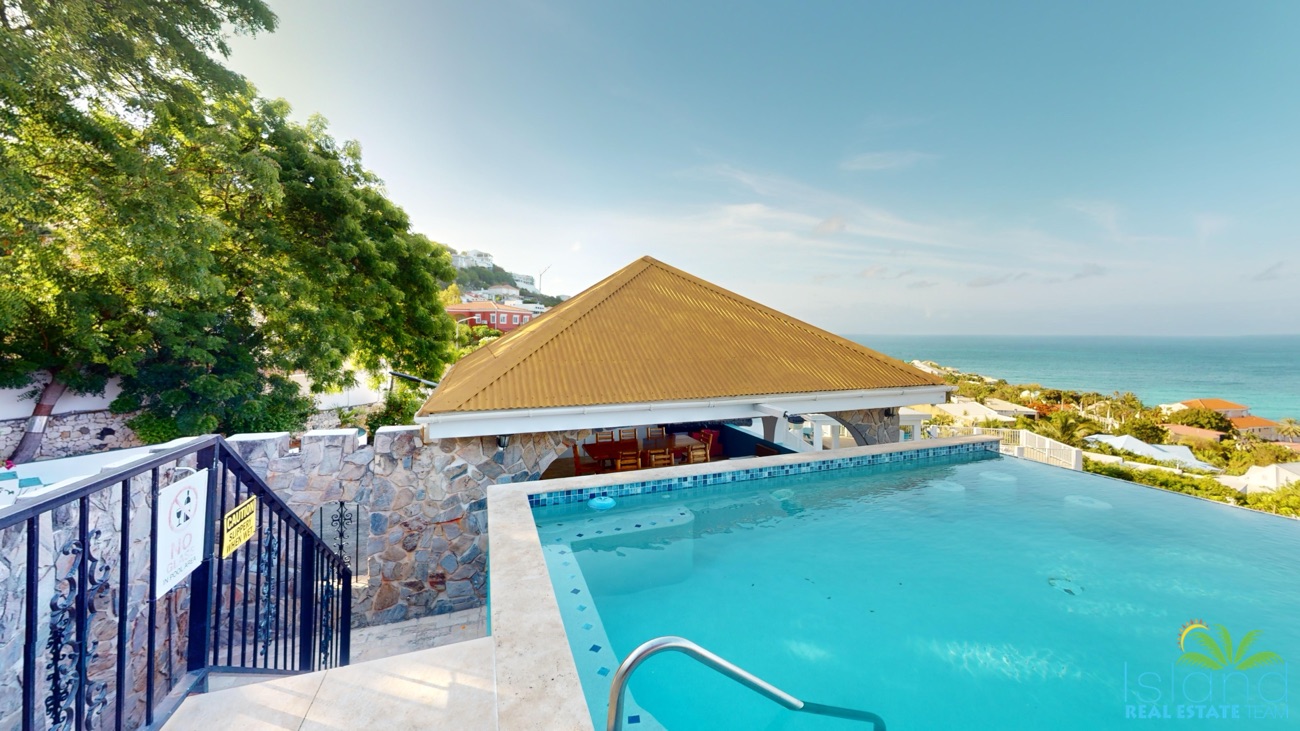
Retirement on St. Maarten works when it is planned around three things: how you will get medical care, what your legal status will be, and how easily family can reach you. The view is the easy part. Every retired couple we know who is happy here settled those three questions before they bought.
The appeal is specific rather than vague. Trade winds all year, no annual property tax and no capital gains tax on resale on the Dutch side, an airport with direct service to North America and Europe, English as the working language of daily business on the Dutch side, and a French side twenty minutes away with Grand Case, Marigot and the beaches at Baie Rouge and Baie Longue.
Carry one sentence into every conversation. Buying property here does not automatically give you residency or the right to remain long term. Ownership and immigration status are separate matters on both sides. Take your situation to a qualified immigration lawyer or the relevant authority and confirm current requirements, because they change and are applied case by case.
Why the island appeals to retirees
- Climate without a winter. Elevated spots such as Pelican Key, Almond Grove and Dawn Beach stay comfortable on fans many nights, which matters when you pay GEBE bills on a fixed income.
- No annual property tax and no capital gains tax on the Dutch side. Two recurring costs that exist in most retirement destinations simply do not apply. The French side has the taxe fonciere and capital gains of up to 34 percent, with relief for a main home.
- Access. Princess Juliana International Airport is the hub for the northeastern Caribbean, which makes family visits realistic. Ferries run from Marigot to Anguilla, and from Simpson Bay and Philipsburg to Saba and St. Barths.
- Language. English is the working language of daily business on the Dutch side, which removes friction with doctors, banks and contractors.
- Two cultures on 37 square miles, shared since the Treaty of Concordia in 1648. Lolos and a beach chair one day, the Grand Case boulevard on Harmony Nights the next.
- Dollar pricing in practice. The guilder is official at a peg of about 1.79, but Dutch side property is priced and settled in US dollars.
Residency has to be confirmed, never assumed
This is the most common misunderstanding we encounter and it is worth being blunt about.
Sint Maarten became an autonomous country within the Kingdom of the Netherlands on 10 October 2010, the date locals call ten ten ten, and it sets its own admission rules. Saint Martin has been a French overseas collectivity since 2007 and follows French rules. The two systems are separate. Buying a condo at Cupecoy does not entitle you to stay, and neither does owning a villa in Terres Basses.
Some retirees never seek residency. They spend part of the year here as visitors within permitted stay limits and keep tax residency at home. Others pursue formal residency. Which path suits you depends on nationality, income sources, healthcare needs and how many days a year you intend to be here. Even Dutch and French nationals should confirm what local admission and registration rules require rather than assuming a passport settles it. Get that advice before you buy, because it sometimes changes which side of the island a buyer chooses.
Healthcare and medical evacuation
Sint Maarten Medical Center in Cay Hill serves the Dutch side and Louis Constant Fleming Hospital in Concordia serves the French side. Between them, and with the doctors, pharmacies, dentists and specialists across the island, routine and much urgent care is handled locally. Plan for the tier above that. Complex cardiac, oncology and neurological cases are frequently handled by flying the patient out, commonly to Guadeloupe, Colombia, Puerto Rico or Miami. Three decisions follow.
- Health insurance that covers you where you live. Coverage that stops at your home country border is not coverage. If you are American, note that Original Medicare generally does not pay for care received outside the United States, with narrow exceptions. Get written confirmation from your plan administrator before you move.
- Medical evacuation cover you have actually read. Know who decides an evacuation is medically necessary, which destinations are covered, whether a companion travels with you, and what happens on the return journey.
- Continuity of care. Bring records, document long term prescriptions, check your medications are available here, and register with a local doctor in your first month rather than during a crisis.
Choosing a property that still works in fifteen years
The house that suits an active 62 year old is not always the house that suits an 80 year old, and the most beautiful sites here are often the least accessible. Buy for the later years.
- Single level, or a building with a reliable lift. Split level villas with internal stairs age badly for owners.
- Level access from parking to front door. Covered parking close in is worth more than a spare bedroom.
- A driveway you would still drive at night in the rain. Some approaches above Guana Bay and Point Blanche are steep and narrow.
- Services within a short drive, including a pharmacy, a supermarket and the hospital at Cay Hill.
- Built for storms. Concrete, impact glass or proper shutters, a documented roof and clean insurance history. Ask what was rebuilt after Irma and to what standard.
- Resilience. Cistern capacity, a working pump, solar with battery storage or an inverter.
- An association that maintains the building. Read the dues, the reserve fund and two years of minutes.
- Easy to lock up and leave, with shutters you can close in a morning and someone reliable to watch it.
Neighborhoods that tend to suit retirees
| Area | Side | Why it works, and what to watch |
|---|---|---|
| Pelican Key | Dutch | Elevated, low density, sea views, two minutes from Simpson Bay services. Check the gradient street by street. |
| Cupecoy | Dutch | Condo buildings with lifts, Porto Cupecoy for groceries and dinner, Mullet Bay Golf Course, short run to SXM. Check the dues. |
| Simpson Bay | Dutch | The most walkable part of the island. Restaurants, marinas, pharmacies and Kim Sha beach on foot. Watch evening noise. |
| Dawn Beach | Dutch | Quiet, lower density, sunrise over the water. You will drive for errands. |
| Indigo Bay | Dutch | Newer master planned construction, close to Cay Hill for the hospital. |
| Oyster Pond | Both | Sheltered water and Oyster Bay Marina. Further from the airport. |
| Grand Case | French | Village life, lolos and the restaurant boulevard, a walkable beach. French language for medical and civil matters. |
| Terres Basses | French | Privacy, large parcels, Baie Rouge, Plum Bay and Baie Longue. Very quiet, and a drive from everything. |
The neighborhood finder in our property tools lets you weight quiet, walkability, proximity to services and budget before you spend a week driving.
Budgeting for retirement here
- Dues and insurance. Both tend to rise. Named storm deductibles are frequently a percentage of insured value rather than a flat figure, so hold a reserve that could absorb one.
- Electricity. GEBE bills carry a fuel charge. Solar and an inverter turn a variable cost into a capital one.
- Currency. Dollar income and Dutch side living align well. Shopping at the Carrefour and dining in Marigot means converting to euros continuously.
- Travel. Budget honestly for flights, yours and subsidised visits from children and grandchildren. Retirees underestimate this line most.
- Health premiums. They rise with age. Model them at 75, not at 65.
- Income tax. Sint Maarten levies income tax on residents. How a foreign pension is treated depends on your circumstances and any applicable treaty, so confirm with a tax adviser before you move.
Estate planning across jurisdictions
Owning property where you are not a citizen creates a problem that a home country will alone may not solve.
On the Dutch side, transfers are executed by a notary and registered at the Kadaster, and that notary is a neutral officer of the law who acts for the transaction rather than for buyer or seller. Discuss how the property should be held and whether a separate will covering the Sint Maarten asset is appropriate.
On the French side, French inheritance law includes rules reserving a share of an estate for children, and there are mechanisms that may allow another national law to apply in some cases. Put that to a notaire before you buy, because ownership structure is easier to set correctly at purchase than to change later.
Then consider home. In most cases US citizens remain taxable on worldwide income wherever they live, and foreign accounts carry reporting obligations. Use one adviser who works across both jurisdictions rather than two who each know only one, and confirm everything with a notary or tax adviser, because rules change.
The honest drawbacks
- Distance from family. SXM makes visits possible, but flights cost money and grandchildren grow up somewhere else. The retirees who thrive here plan two trips home a year and keep a guest room.
- Hurricane season, 1 June to 30 November, with peak risk August through October. Irma made landfall on 6 September 2017 as a category 5 storm. Living here means shutters, supplies and watching forecasts.
- Imported goods cost more. Groceries, building materials and furniture all reflect freight and duty.
- Specialist depth is limited. A condition needing frequent specialist review means travel. Be realistic before you commit.
- Administration is slow. Permits, deliveries and installations take longer than you expect.
Perguntas frequentes.
Does buying property in St. Maarten give me residency?
No. Ownership and immigration status are separate on both sides and buying does not automatically grant the right to reside. Confirm your options with a qualified immigration lawyer or the relevant authority, because requirements change.
Can I keep my US health plan when I retire here?
Original Medicare generally does not cover care received outside the United States, with narrow exceptions, and other plans vary widely. Get written confirmation from your plan and arrange international cover plus medical evacuation before you move.
Is there tax on my pension in Sint Maarten?
Sint Maarten levies income tax on residents, and how foreign pension income is treated depends on your circumstances and any applicable treaty. This is a question for a tax adviser who understands both jurisdictions.
Do I need to speak French?
Not on the Dutch side, where English is the working language of daily business. On the French side, functional French makes medical appointments, administration and banking considerably easier, and you will be in Marigot and Grand Case regularly wherever you live.
Should I leave the island during hurricane season?
Many retirees spend part of August to October elsewhere, which conveniently overlaps low season and visits to family. If you do, buy something straightforward to secure and arrange someone reliable to check on it.
Next steps
The order that works is advice first, a rental season second, and a purchase third, chosen for how you will live at 80 rather than how you feel at 62. Speak to an immigration lawyer, confirm in writing what your health plan covers abroad, price evacuation cover, and only then shortlist property.
Run the numbers in our property tools, look through current listings with accessibility in mind, meet our team, and talk to us when you want an honest opinion on whether a building suits a long retirement. Confirm anything involving tax, title, inheritance or immigration with a notary, tax adviser or immigration lawyer, because rules change.